Traversing European Coastlines (TREC) was a unique and unprecedented scientific expedition. From April 2023 to July 2024, more than 70,000 samples were collected from over 100 sites across 21 countries, spanning the entire European coastline – from inland environments to coastal regions and offshore waters.
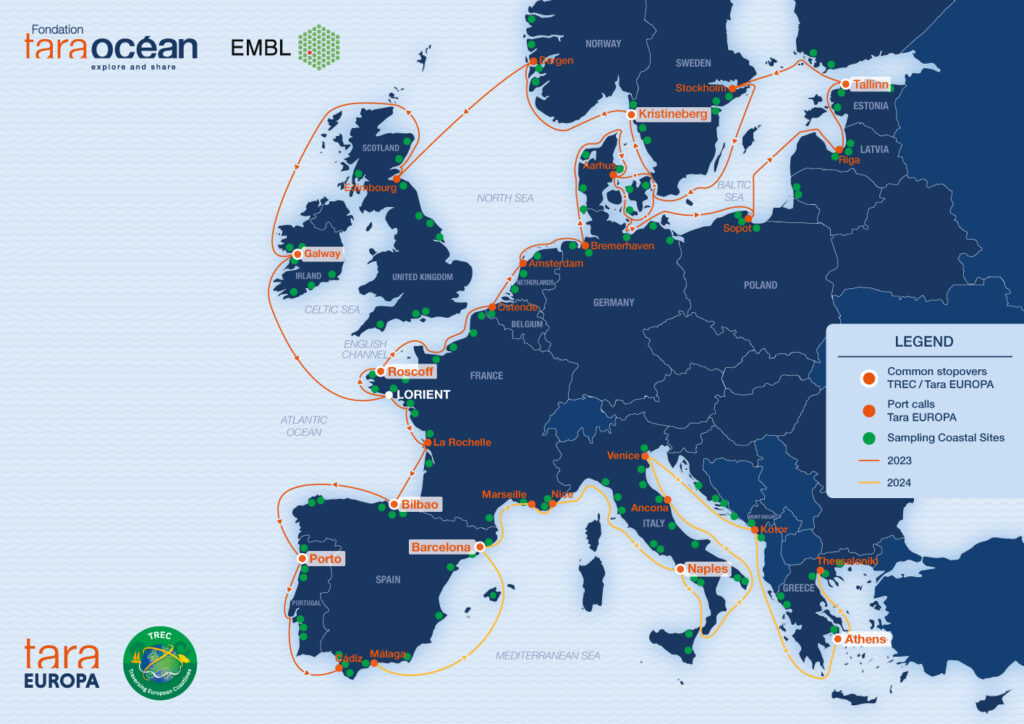 More than 70,000 samples were collected from over 100 sites across 21 countries during the TREC expedition. Credit: EMBL.
The remarkable dataset collected during TREC was made possible through a major international collaboration led by EMBL, in partnership with the Tara Ocean Foundation and the European Marine Biology Resource Centre, and supported by more than 40 local research institutions.
The TREC Symposium 2025, held on 1-3 December at EMBL Heidelberg, brought these teams together once again to review progress, share data, present findings and explore how best to combine data, expertise and methods across disciplines to maximise scientific insight. Presentations by BIOcean5D colleagues highlighted how the data collected during TREC is helping to advance our understanding of marine biodiversity across space, time and human impact.
The symposium opened with a warm welcome from Peer Bork (EMBL Interim Director General and BIOcean5D Project Coordinator) and Paola Bertucci (Head of EMBL Scientific Expeditions and Co-lead of the BIOcean5D work package dedicated to filling the marine biodiversity knowledge gap).
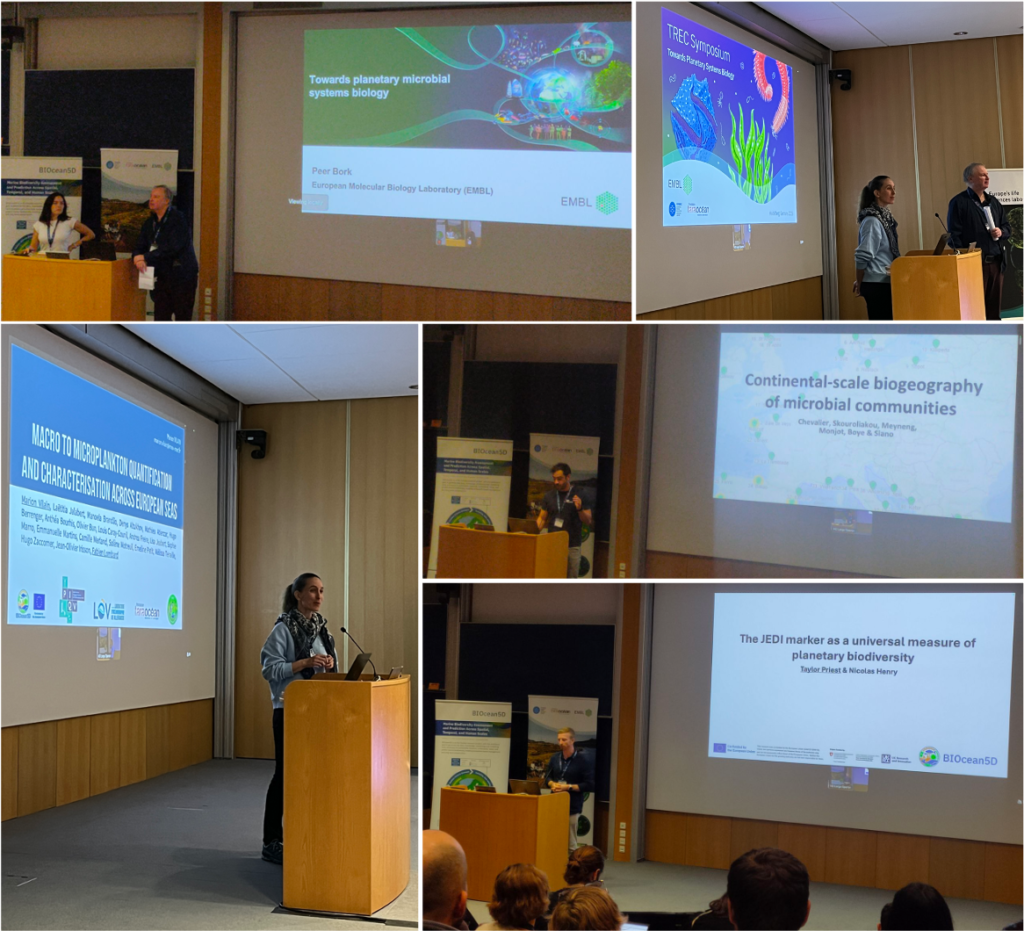
The first session, focused on Planetary Microbial Systems Biology, featured new insights from BIOcean5D colleagues:
- Marion Vilain (Postdoctoral researcher, IMEV) shared findings on the ecology and structure of plankton communities along European coasts,
- Mathieu Chevalier (Researcher, IFREMER) presented results from his study on estuarine microbiome changes along European environmental gradients,
- Taylor Priest (Postdoctoral researcher, ETHZ) introduced his work on the JEDI marker, a powerful tool for measuring planetary biodiversity.
The TREC Symposium continued in the afternoon with a second session on Planetary Cell Biology, during which Tina Wiegand (Imaging Specialist, EMBL) – who contributes to BIOcean5D through the generation of high-quality standardised marine data – presented her work on advanced feedback microscopy for high resolution imaging of plankton.
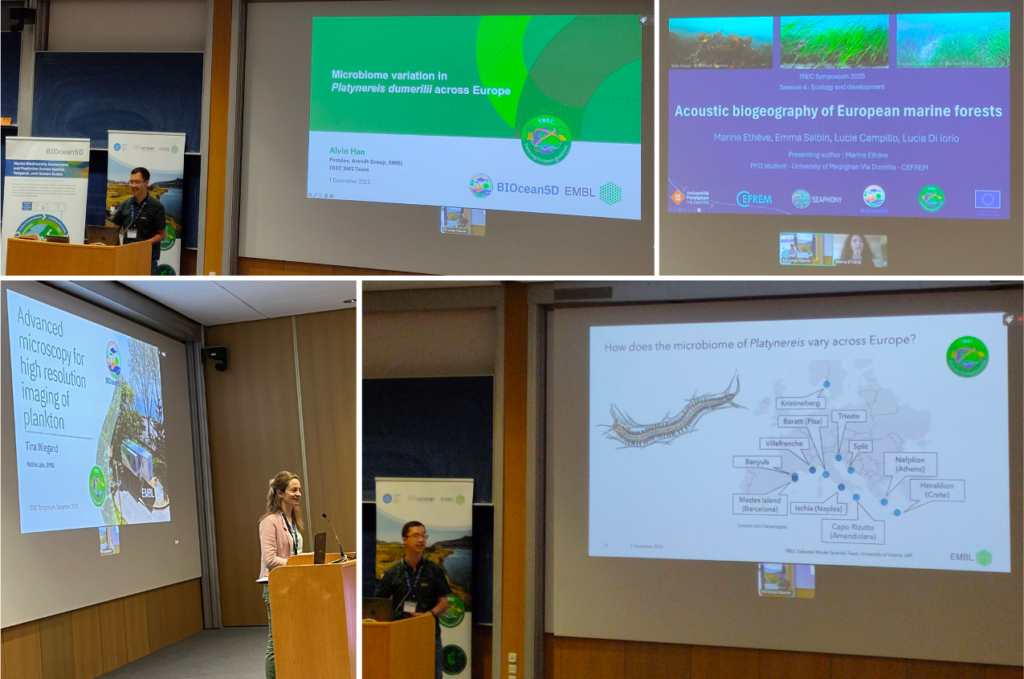
The third session, dedicated to Microbial & Organismal Interactions, included further insights from BIOcean5D colleagues:
- Caroline Juery (Postdoctoral researcher, EMBL) shared results from the metagenomic exploration of the triptych photosynthesis / fungi / bacteria on European coasts,
- Alvin Han (Postdoctoral researcher, EMBL) presented new findings on the microbial variation in Platynereis dumerilii across Europe,
- Liz Hambleton (Group Leader, University Vienna) discussed animal-algal photosymbiosis across environmental and evolutionary gradients.
The first day of the Symposium concluded with a fourth session on Ecology and Development, featuring presentations from colleagues:
- Marine Ethève (PhD, CEFREM, University Perpignan) presented research on the acoustic biogeography of European marine forests,
- Cecilia Teillet (Postdoctoral researcher, IFREMER) shared advances in meiofauna imaging for biodiversity studies.
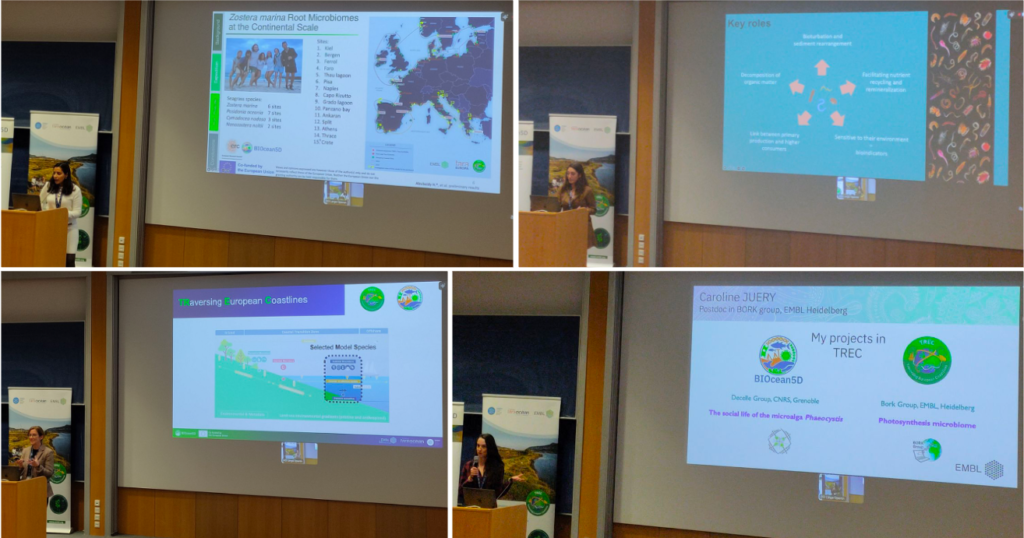
The second day of the TREC Symposium opened with a session focused on Paleocore Studies. Paleocore, a BIOcean5D project, analyses sediment cores collected from 15 sites across nine European countries during TREC. Its goal is to understand how marine biodiversity has changed over time in Europe in response to human activity.
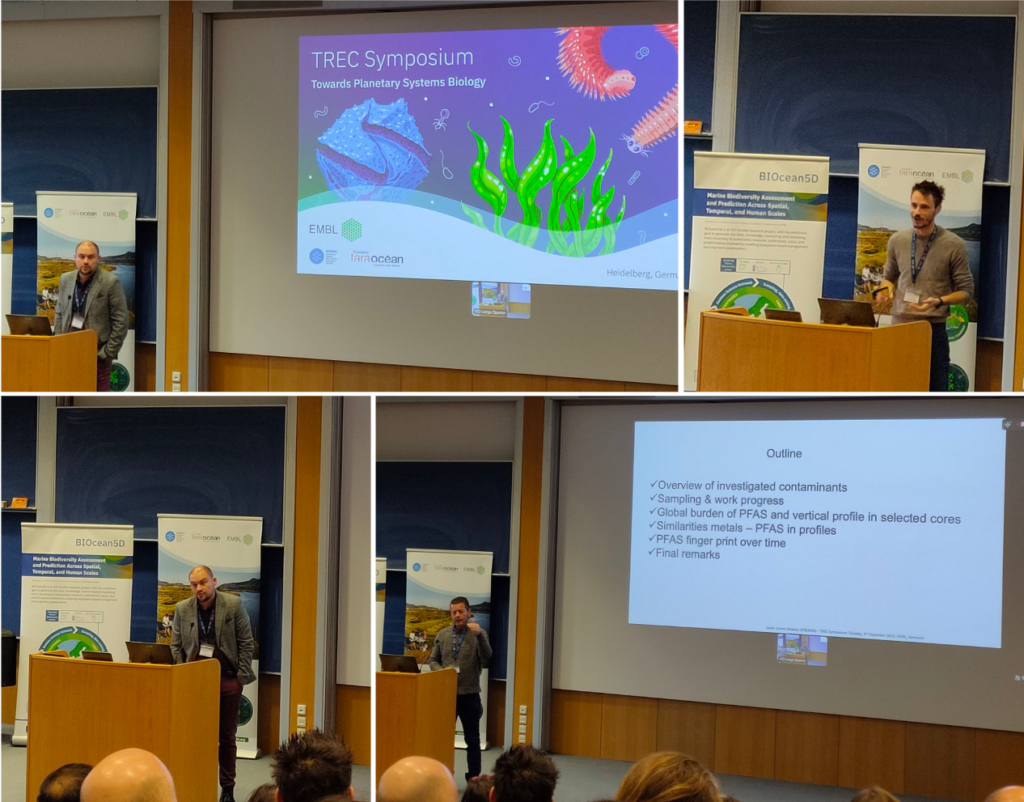
Raffaele Siano (Senior Researcher, IFREMER, Co-lead of the BIOcean5D work package on understanding biodiversity in critical marine habitats) introduced the Paleocore project, followed by contributions from BIOcean5D colleagues:
- Javier Castro Jimenez (Senior Research Scientist, IFREMER): contaminant profiles,
- Guillermo Rangel (Researcher, University Copenhagen): MetaG data and eutrophication impact,
- Ioli Skouroliakou and Mathisse Meyneng (Postdoctoral researchers, IFREMER): impacts of aquaculture and industrialisation.
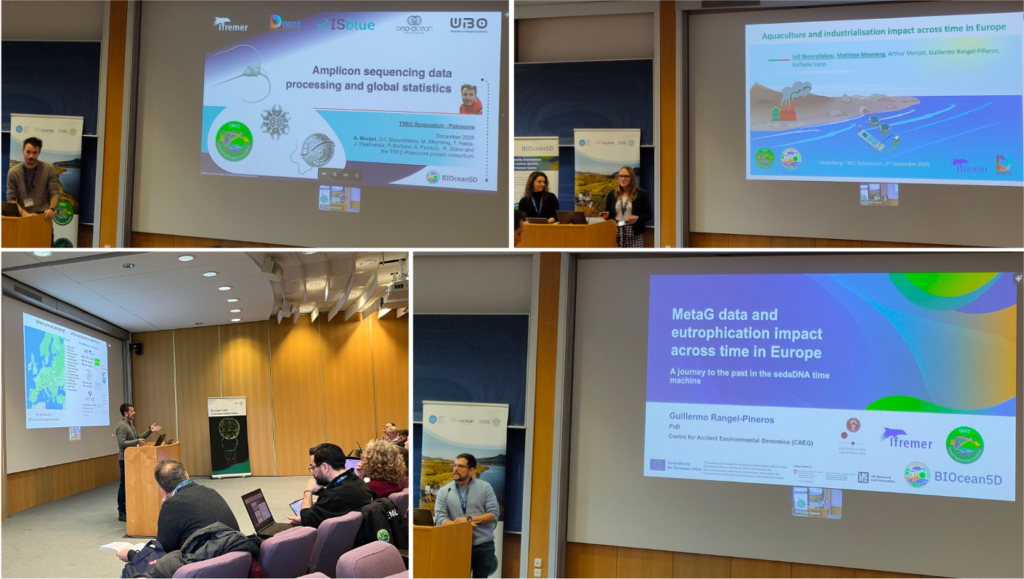
The next session focused on Planetary Environmental Profiling and featured a presentation by Nicolas Briant (Geochemist, IFREMER) – who contributes to BIOcean5D’s effort to unveil marine biodiversity change from pre-industrial to modern times through sediment paleogenomics. He presented his work on metal concentrations in European soils and sediments, exploring land-sea connectivity.
The final session of the day explored Planetary Processes and included a presentation by Ulisse Cardini (Senior Researcher, Stazione Zoologica Anton Dohrn) – who contributes to BIOcean5D’s study of (sub)mesoscale processes shaping coastal marine biodiversity along land-sea gradients. He shared insights from dissolved gas measurements in oceanic and coastal waters.
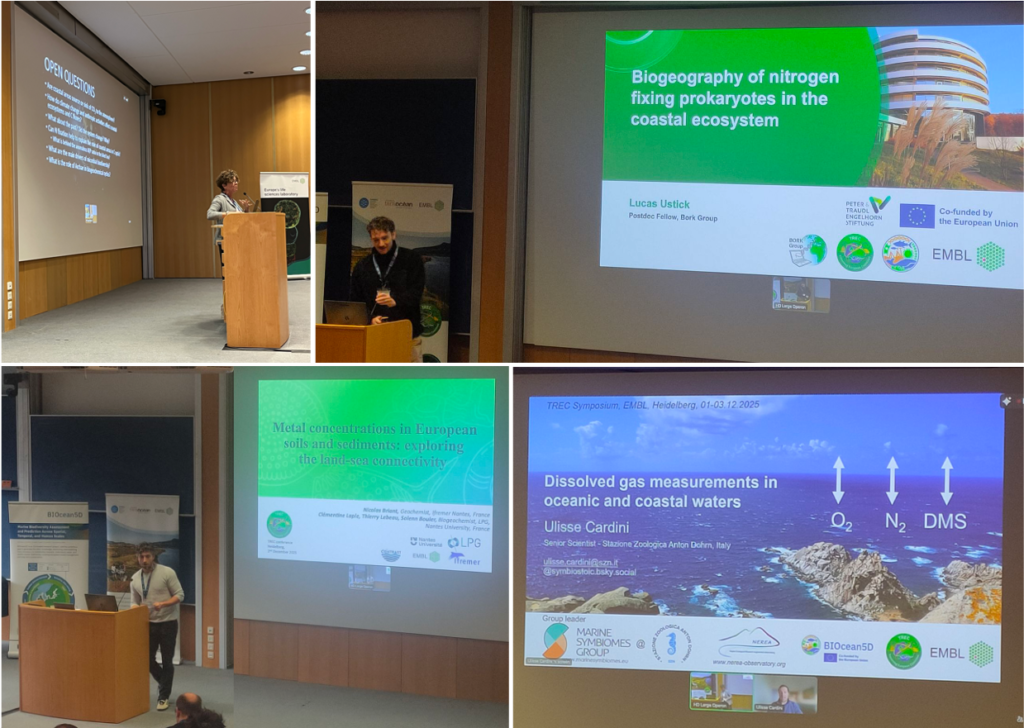
Grateful thanks to EMBL for the organisation and warm welcome at the 2025 TREC Symposium and to Amandine Nunes-Jorge and Sera Guli for the photos from the event.