Plankton taxonomy data is critically important, providing robust evidence and underpinning key indicators to inform marine policy, management and conservation. Yet as the need for this essential data grows, the number of trained taxonomists is declining and funding is being reduced. Against this backdrop, the recent BIOcean5D training course – Plankton Taxonomy from Quantitative Imaging Devices (using EcoTaxa) – aimed to strengthen the development of professional taxonomy skills, ensuring that plankton taxonomic data and expertise remain available.
Following an online preparatory phase that began on 6 January 2026, 34 participants were welcomed at the Institut de la Mer de Villefranche (IMEV, Sorbonne Université-CNRS, France) for the in-person training phase from 19-23 January 2026. Representing a wide range of career stages – including PhD students, postdocs, junior and senior researchers, engineers, research assistants and technicians – the group had travelled to Villefranche-sur-Mer from 18 countries around the world.
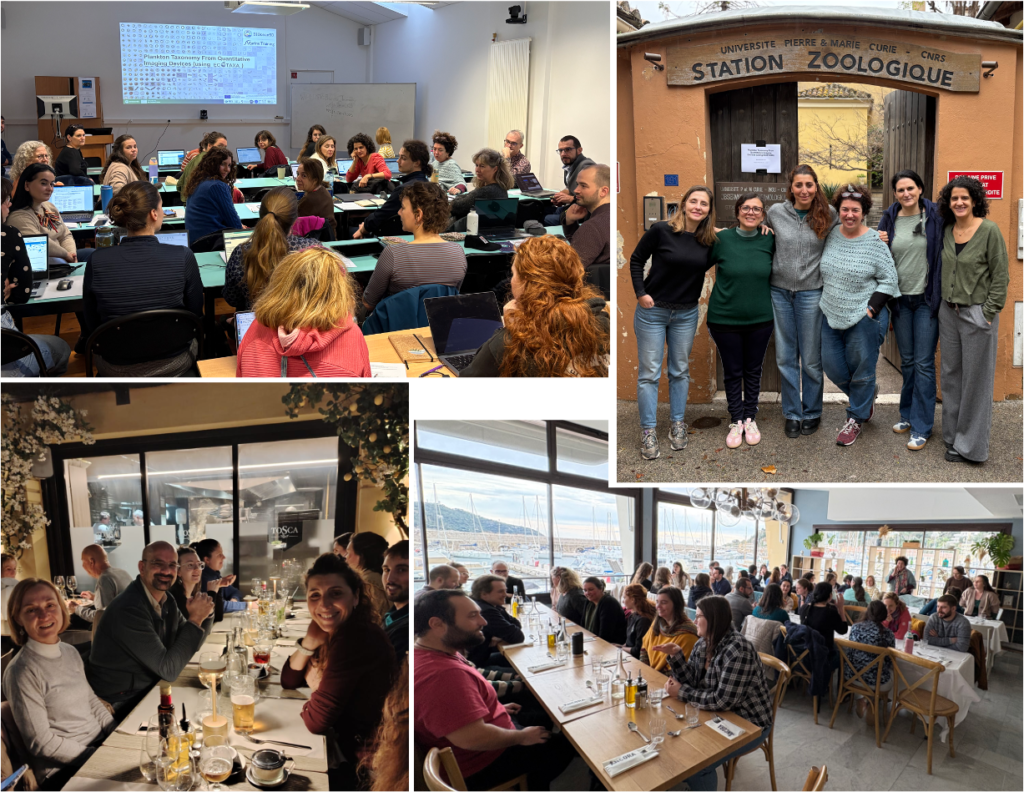 Credit: Fabien Lombard.
After a warm welcome and introductions, the week began with an overview of EcoTaxa: an open-source, web-based platform managed by IMEV for the centralisation and collaborative classification of plankton images. Hosting over 700 million images from approximately 900 institutions and 4500 users, EcoTaxa accelerates biodiversity analysis through the combination of machine learning and expert validation.
Dedicated data-management sessions during the week provided participants with advice and practical guidance on using EcoTaxa efficiently. Participants particularly valued learning directly from individuals involved in the platform’s creation and development, and reported leaving the course “feeling comfortable navigating and using EcoTaxa”.
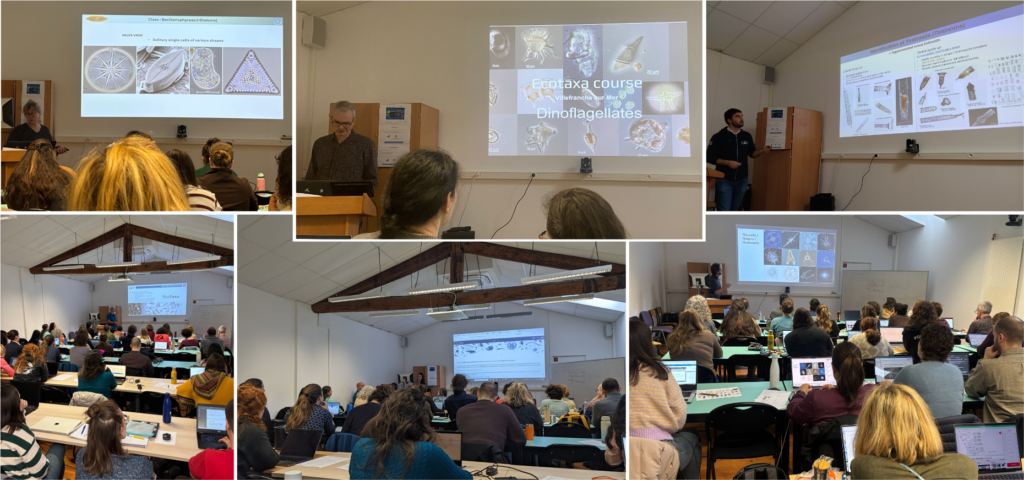 Credit: Fabien Lombard, Hugo Zaccomer, Savannah Stresser, Myrsini Charikleous.
Extensive plankton taxonomy training was another key highlight of the course. Sessions focused on the morphological identification of diatoms, tintinnids, rhizarians, metazoans and dinoflagellates, with each followed by hands-on practical sessions to apply the newly-acquired knowledge about each planktonic group.
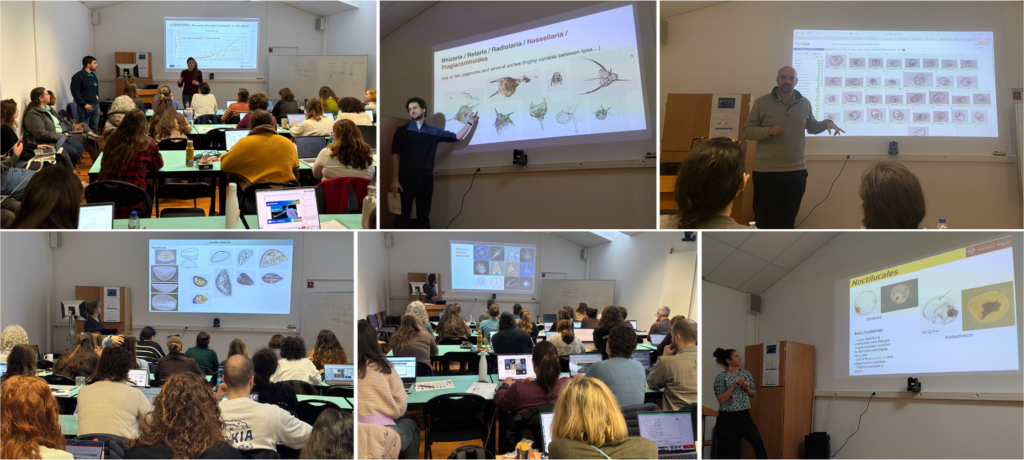 Credit: Fabien Lombard, Hugo Zaccomer, Savannah Stresser, Myrsini Charikleous.
Overall, the course was described as a “productive and inspiring week” and a “great success” that enabled the “achievement of a lot of ambitious goals”. The in-person format – supported by “excellent” organisation that created a “warm” and “welcoming” environment – provided the opportunity for “rich interactions” and “interesting discussions and exchanges”. Collective progress was helped through “peer learning”, “collaboration and mutual support” and the group hopes to continue working together as a “network for discussions about plankton taxonomy and EcoTaxa”.
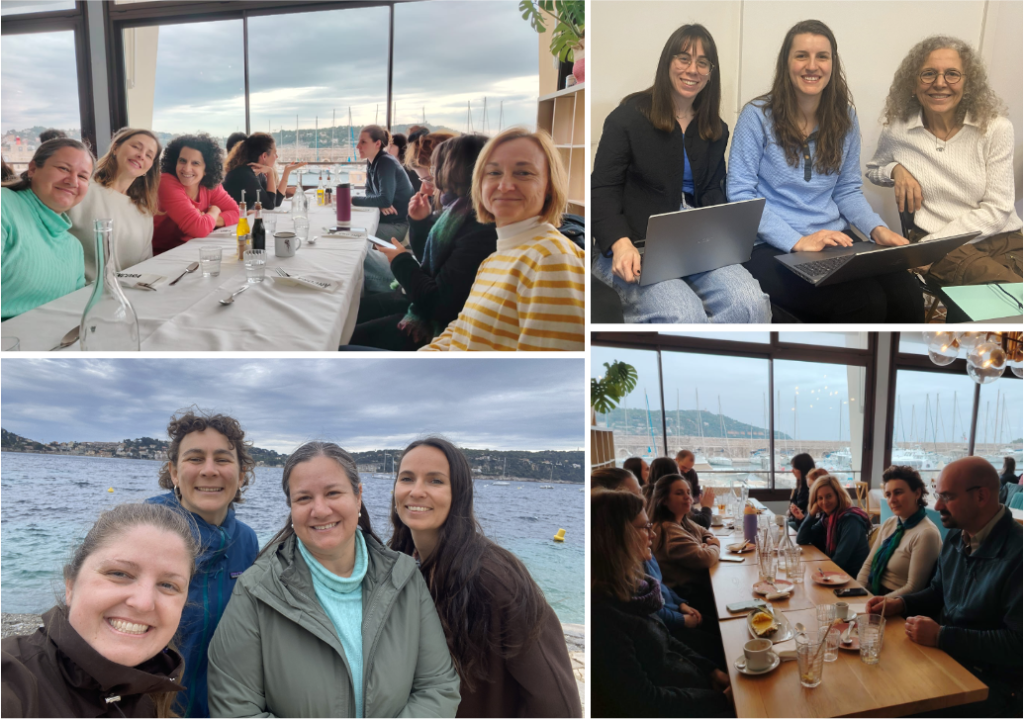 Credit: Fabien Lombard, Savannah Stresser.
The success of the course was made possible by the course facilitators, who came together from across Europe to share their taxonomy expertise. Participants highlighted, in particular, the diversity of specialists, their high-level expertise in plankton taxonomy, as well as their enthusiasm and availability. All respondents agreed that effective guidance and feedback were provided, summed up by the comment: “the course instructors were the best part of the course… they did an incredible job answering everyone’s questions”.
Following completion of the training, participants plan to increase and improve their use of quantitative imaging instruments including the FlowCam, Imaging FlowCytobot and PlanktoScope, in addition to EcoTaxa. The knowledge and experience acquired will also guide future sampling efforts and research, including the adaptation of experiments during upcoming fieldwork, across existing projects such as BIOcean5D as well as future initiatives.
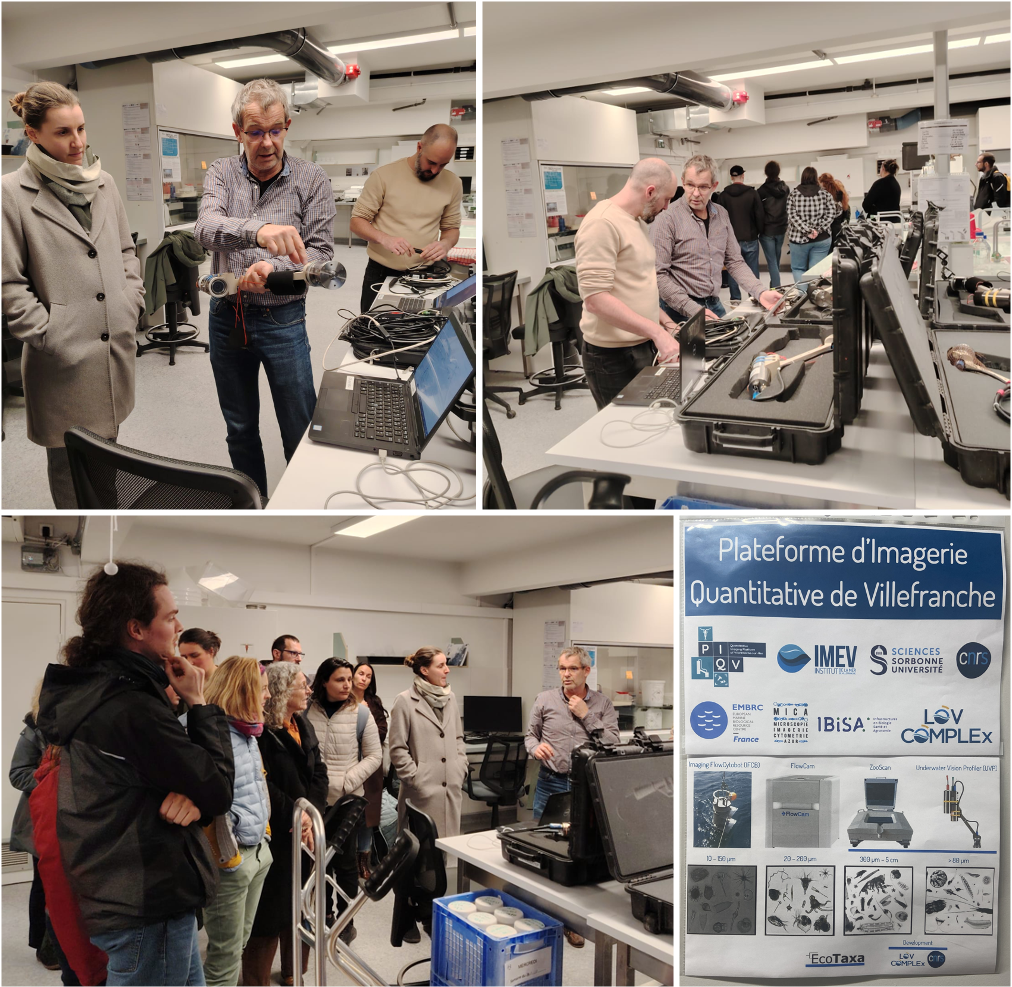 Participants were invited to visit the Quantitative Imaging Platform (PIQv) – the world’s only platform dedicated to quantitative imaging analysis of plankton and aquatic detritus. Credit: Fabien Lombard, Savannah Stresser.
We gratefully thank Fabien Lombard, Hugo Zaccomer, Manoela Brandao (LOV–IMEV, EMBRC-France) and Cláudia Delgado (MarineTraining.eu, EMBRC-Belgium, UGent) for the excellent organisation of the course.
We also extend our sincere thanks to the course facilitators: Fabien Lombard, Hugo Zaccomer, Manoela Brandão, Sophie Marro and Camille Merland (LOV–IMEV, EMBRC-France), Iole Di Capua (SZN, EMBRC-Italy), Karine Leblanc (MIO), Alexandra Kraberg (AWI) and Tristan Biard (ULCO).